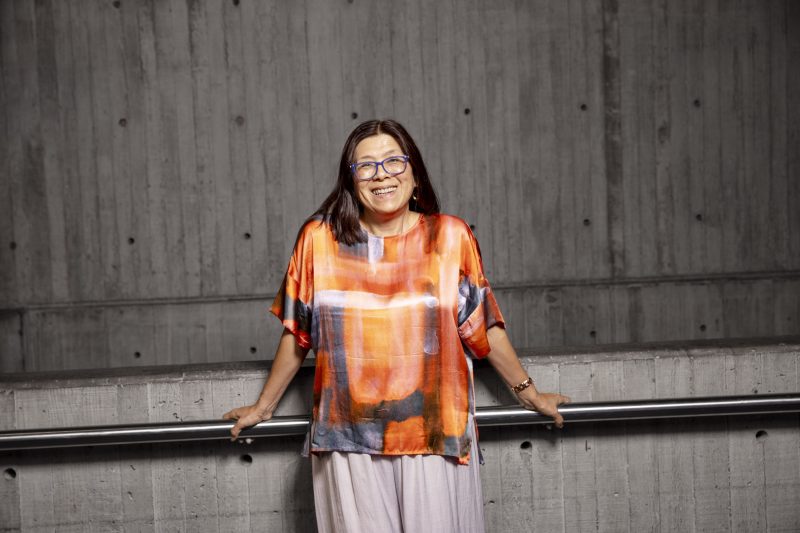
Joanne Kee is an arts leader, producer and cultural advocate whose career has been dedicated to creating spaces where artists, audiences and communities can connect. Based in Sydney/ Gadigal, she has worked across theatre, music, festivals and cultural institutions, curating spaces where artists and diverse voices can thrive.
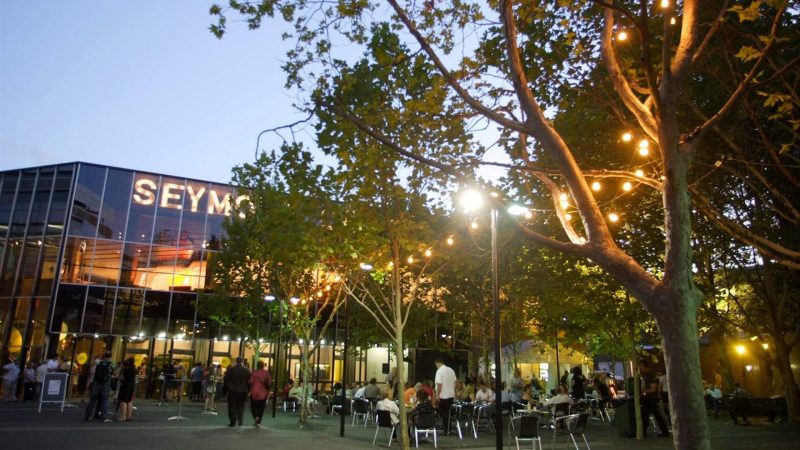
Over the years, Kee has contributed to some of Australia’s leading cultural organisations, helped establish initiatives that champion underrepresented voices, and created opportunities for artists and audiences to connect in meaningful ways. From her work with the National Theatre of Parramatta to her involvement in the Sydney International Women’s Jazz Festival, her approach has remained consistent — using the arts as a platform for connection, collaboration and belonging. Today, as Artistic Director of the Seymour Centre, she continues to shape spaces where creativity and community can thrive.
In this Colour Box Studio Q&A, Joanne reflects on her creative journey, the lessons she’s learned throughout her career, and the importance of building spaces that celebrate community, storytelling and cultural exchange. She also shares insights into Cabaret, Cocktails and Karaoke – a monthly event that runs at the Seymour Centre – and how creating joyful, accessible experiences can bring people together in unexpected ways.
The next Cabaret, Cocktails and Karaoke extravaganza is coming up 26 June 2026, 7:30pm, Seymore Centre, Sydney.
Tell us a little bit about yourself and what you do.
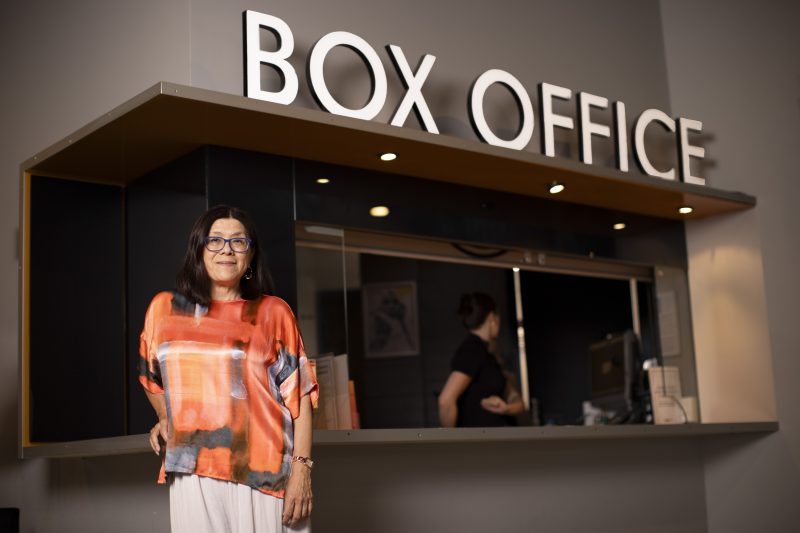
I’m the new Artistic Director of the Seymour Centre, where I’m focused on creating opportunities for artists and building a venue that feels welcoming, relevant and connected to the communities around it.
My love of the arts started very early. My dad used to take us to shows all the time. They weren’t necessarily highbrow experiences—it could be the circus, phantom ninjas or a concert. I pestered my Mum to take me to the Monkeys when I was really young and the only thing I can remember is the screaming. Our house was also full of music. One minute it was David Bowie, the next Sergio Mendes, then Rhapsody in Blue. That curiosity about creativity and storytelling has stayed with me my entire life.
Looking back, I think my father was a frustrated creative. Like many people of his generation, the career options were Doctor, Lawyer, Dentist. He was one of the early cohorts of Chinese students at Sydney University. I think he spent a lot of time playing table tennis and pool. Alongside this, many of my elders believed in raising people up and caring for our community. Our house was always open. There was a genuine sense that everyone was welcome. When I look at my career now, I realise that’s at the heart of what I do. I am always trying to facilitate the creation of great work, support artists and create opportunities.
Interestingly, I didn’t start my career in the arts. I worked in finance and travel before eventually taking a role with the Arts Council of England. That was the moment I realised I had found my thing. I loved being surrounded by artists, ideas and possibilities, and being in a position to make things happen.
How did you start your creative practice and why?
I’ve always been drawn to stories — the way they bring people together, shift perspectives and create moments of connection that stay with you long after the experience ends. That curiosity led me to live performance and the creative industries, where collaboration, ideas and human connection sit at the centre of the work.
What drives my practice isn’t necessarily making the work myself, but creating the conditions for artists and audiences to connect in meaningful ways. I’m interested in building spaces where people feel engaged, challenged and included — and in exploring ideas from multiple perspectives to better understand ourselves and each other.
Where did you grow up and how has it influenced your practice?
I grew up around Hurstville in Sydney’s south at a time when it looked very different to how it does today. My family was one of the few Chinese families in the area, so I grew up being “the novelty Chinese kid” — something that feels quite surreal now given how multicultural the community has become.
My family is fourth-generation Australian and lived in Darwin before the bombing, so ideas of identity and belonging were always layered and complex within my own experience. One of my Paw-paws was sent back to China through the White Australian policy. I find it fascinating that before Federation there were 7 Chinese for every 1 Anglo person in the top end and that the citizens and Government of Australia decided this wasn’t acceptable and systematically sent people back to China.
It makes me sad that we are living in divisive times, when the contribution my family and many others have made to build this country is so significant.
For me the arts provide an opportunity for people to feel seen, understood and to connect.
When I was running National Theatre of Parramatta my commitment to creating opportunities for artists who are often excluded or disadvantaged by traditional arts training pathways and the existing arts networks deepened. It reinforced for me how important access, community and cultural context are in shaping who gets to participate in the arts — and whose stories are heard.
Tell us about your past creative projects. What has been a highlight so far?
It’s difficult to choose just one project, I have worked with so many wonderful people. However, I’ll share some which stand out for me.
The first is White Pearl, a sharp, provocative work that explored race, identity and privilege through the lens of a beauty company in crisis. It was brilliantly written, fiercely funny and deeply uncomfortable in all the right ways. We toured it three times around Australia, and I know from feedback that this production was a watershed moment in theatre. I was the lead producer and we co-produced with Sydney Theatre Company which meant that this work had high visibility in front of a traditional mainstage audience.
The second is Things Hidden Since the Foundation of the World, created by Javaad Alipoor. It was a remarkable piece of theatre that explored power, technology, surveillance and the stories we tell ourselves about the world. We co-produced this with the Javaad Alipoor company and the work went on to tour internationally and connected with audiences around the globe.
What connects both productions is that they are beautifully political without ever feeling like a lecture. They’re wrapped in extraordinary storytelling, rich characters and compelling theatrical experiences. For me, that’s always the sweet spot—when audiences are completely captivated by a story and find themselves thinking about it long after they’ve left the theatre.
Tell us about your current project?
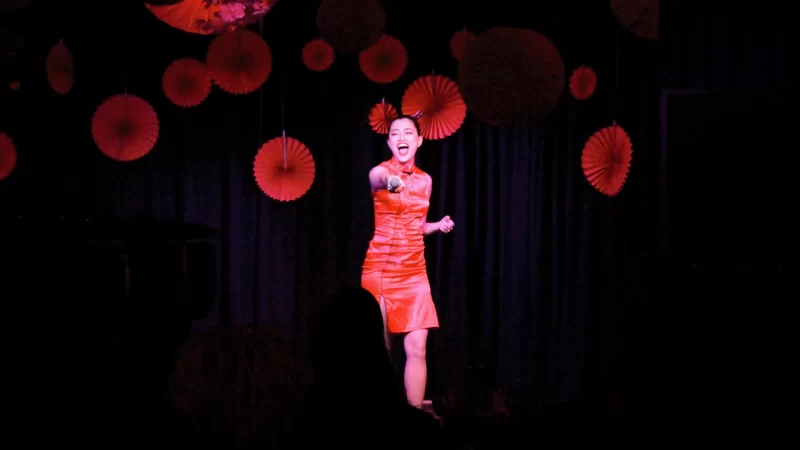
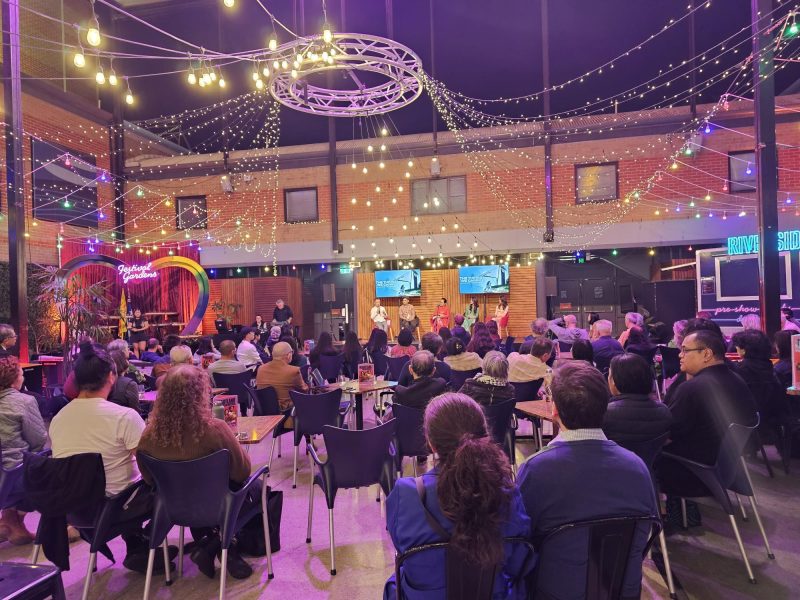
One of the projects I’m most excited about right now is Cabaret, Cocktails & Karaoke.
The idea actually started when I saw Kimie Tsukakoshi perform in a production at La Boite. Later I came across footage of her music theatre work and was struck by her singing. She has warmth, humour and a genuine sense of joy that feels infectious.
I started thinking about how I could create an event that celebrated Asian Australian artists and this night celebrates the talents in our community and creates a place for community and hanging out and also sharing our successes. The show is old school variety show/cabaret at the start and party and celebration with the audience being involved for the karaoke in the second part of the night.
I’m not a karaoke singer myself, but I love the atmosphere around it. There’s something wonderfully democratic about karaoke. It brings people together, encourages participation and creates moments that are spontaneous, joyful and memorable. That’s exactly the feeling we’re trying to create.
Who or what inspires your practice?
Artists who are brave enough to challenge conventions and create new possibilities inspire me.
I am in awe of Tarell Alvin McCraney who came out to run a playwriting mentorship program for me. Hard to describe his incredible presence and generosity with people. I know for the playwrights involved it was a life changing experience.
Another artist who is also phenomenal for her capacity to inspire and create the most beautiful supportive environments is Mina Morita, Artistic Director at Woolly Mammoth. She came to direct Yoga Play and also mentor POC Directors. The feedback I had, about the way she ensured people were cared for and inspired to do their best work was amazing. Another artist who is making life affirming possibilities for artists.
Plus of course I’m inspired by people and communities. Some of the most exciting ideas come from conversations and just being open to possibilities.
Where do you feel most creative and why?
In truth, inspiration happens all the time.
My mind is constantly making connections between things and wondering what might be possible. I’ll hear a piece of music, read an article, see a performance, walk through an exhibition or have a conversation and suddenly an idea starts forming.
Sound is often a big trigger. When I say sound, it could be quiet, it could be nature, or it could be music. I’ve just become obsessed by Alpha Mist, whose sci-fi world-building around their album Roulette has completely captivated me. I love artists who create entire universes around their work because it reminds me that creativity has no boundaries.
What do you hope audiences take from your work?
More than anything, I hope people feel some kind of emotion. For our identity works, I hope they feel seen and connected.
I love it when someone tells me that a play reminded them of themselves, their family or a friend. Or that there town was mentioned and it makes them proud. There is something incredibly powerful about feeling validated and recognised through art.
What gets you through creative challenges or tough industry times?
Trying to stay optimistic and finding strength in amazing people.
Also I really believe that art is important, it can change lives. Not all art is meant to, or has this function, but when it does, its powerful. Human connection matters.
What future projects are you looking forward to?
Changing the perception around what a building like the Seymour Centre can be and who it is for. Responding to how people move in the world now.
I am interested in creating a cultural living room — a place where artists, students, communities and audiences naturally come together. Somewhere warm, welcoming and full of life, where you might hear different languages in the foyer or on our stages, run into friends unexpectedly, or make a new connection, stay for a drink after a show, or discover something completely new.
I want Seymour to be a safe place where creatives can experiment, take risks, develop ideas and build sustainable careers, while feeling genuinely supported and connected to audiences and community.
What excites me most is creating a venue that people feel belongs to them — not just somewhere you visit for a performance, but somewhere you feel comfortable spending time, being curious and connecting with others. For me, the future of cultural venues is about creating spaces for belonging, conversation and shared experience.
Whose work are you digging at the moment?
One artist whose work I’m really enjoying is Happy Feraren. I loved her first play, Saviour, currently at Griffin Theatre Company, it’s a wonderful example of a distinctive new voice emerging in Australian theatre, and it’s very political, but also very funny.
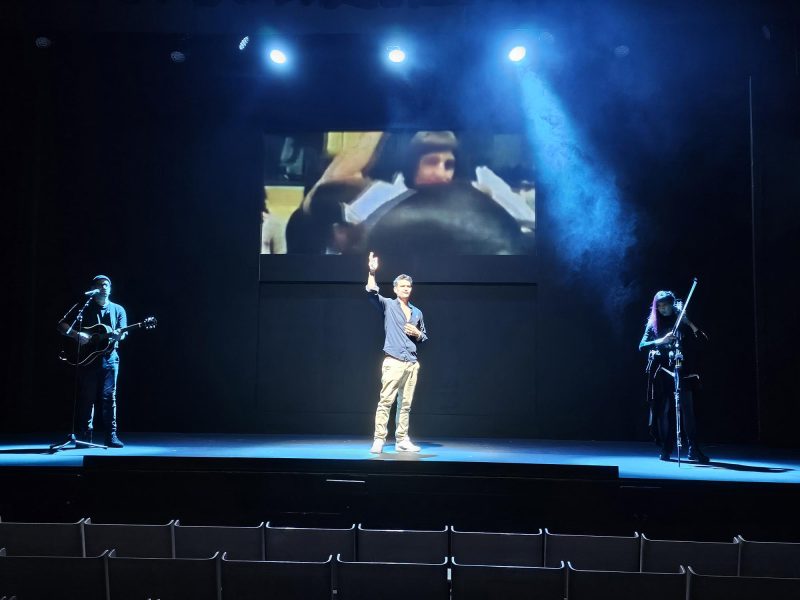
Someone else who I recently came across is Sam Kissajukian. I am plotting on how to present his autobiographical work 300 paintings which is a story based on a manic bipolar episode. This is an incredible piece and I keep on telling everyone that it’s a must see for so many reasons.
Where can we find and follow you online?
For me personally https://au.linkedin.com/in/joannekee and I sometimes post on Instagram @joanne_2037
You can also find information about upcoming events, performances and projects, including Cabaret, Cocktails & Karaoke, through the Seymour Centre website and social channels. Instagram: @seymoursydney
If you’re into art and creativity check out these Colour Box Studio interviews with other creatives: click here.
Want to learn more about your creative community? Sign up to the Colour Box Studio Newsletter here.